In 2006 Julian Tudor Hart published The Political Economy of Health Care: A Clinical Perspective. He was nearing the end of his life, and was expressing dismay at the creeping privatisation of the NHS. ‘They have had to do it by stealth,’ he said, ‘proclaiming each successive capitulation to commerce as support for otherwise declining NHS standards. No open electoral battle has ever been fought, but the slide back to the market continues, driven by its own idiot logic of the bottom line, where profit stands proxy for every other outcome.’
My own book describes the NHS austerity years which followed four years after Tudor Hart’s book was published, where health service funding was aggressively restrained like never before, at the very moment when a market economy was introduced for the NHS in England. Tudor Hart would have hated it.
And then, in 2020, came the ultimate test: how would the NHS perform in the face of a global pandemic following years of decline? Badly, is the short answer. The NHS has now lost its lofty position as a health service once globally admired; not many NHS clinical staff currently believe that our way of doing healthcare is world-beating, the best, to be copied and emulated. Indeed, it is now us who are casting around, searching for answers to learn where we have gone wrong and to start playing catch-up.
Our politicians have let us down, and the nation has been denied a rational debate about the NHS. Most NHS consultants that I know regard the service as being in the red zone: there is little spare capacity and most services are running on empty. To quote Tudor Hart, back in 2006, ‘We now need a new big picture, of where we have come from, where we want to go, and how we can get there.’ I hope this book will provide useful insights to contribute to the debate on the future of health care in the UK as we seek to reverse years of decline and help to restore the NHS to its former glory.
I have tried to write a book that will resonate with other healthcare workers, whilst also being of interest more widely. Some might think that my perspective as a dermatologist limits the generalisability of what I have to say. They may be correct, but there is nothing about dermatology that makes it a special case. I have little doubt that the themes and events described in this book have been replicated elsewhere in the NHS and are just as relevant to rheumatology, colorectal surgery, cardiology and ophthalmology as they are to dermatology.
No single author has the skills or experience to provide a coherent narrative about the whole of the UK’s NHS; my apologies to anyone who thinks that this is what I have attempted to do. You have my personal and opinionated ramblings. As someone who has devoted my working life to the NHS, and who still believes passionately in the concept, I hope that my views will not go unheeded.
My ambition with this book is more modest than offering solutions; I just want to contribute to the debate that must now come if the NHS is to regain its position of pre-eminence.
Alex Anstey MD
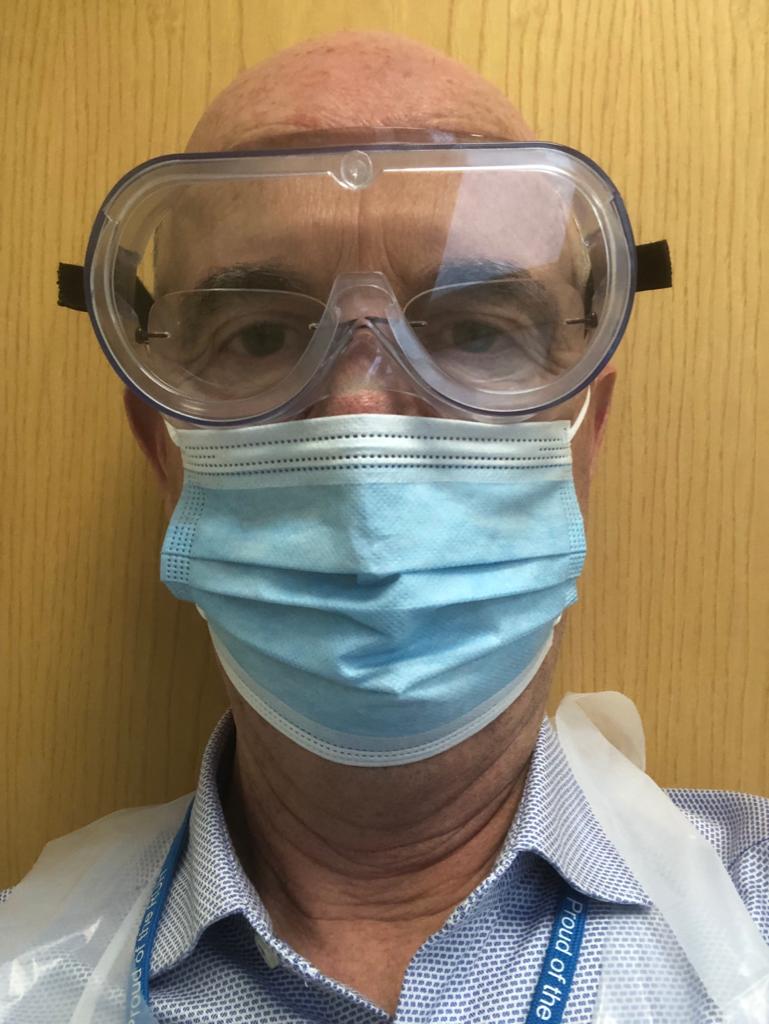
 Alex Anstey