Sample two of three from Under The Skin: My Fight To Save The NHS
I was born in Westerham, Kent in January 1959, delivered at
home by my father Richard as the midwife failed to make
it. We lived in the last house on Hosey Hill, just one mile
from Chartwell, the former home of Winston Churchill. My
mother Denyse was born in South Africa to a French family. She
had arrived in the UK in her early twenties with little money,
a South African accent and a love of classical music. Richard
wasn’t bothered about accents, having grown up in a family
with a cook, a butler and an assumption that one went to Eton
(as his father had done); it had put him off posh accents for life.
He too was passionate about classical music.
I was the third of four children; there was also a large
extended family with numerous uncles, aunts and cousins. Our
home was a happy but noisy place, with Richard often using his
hi-fi to drown out the shouts and screams of the children. My
parents were naturists too; all very embarrassing when I had
friends to stay. At the age of thirteen, my parents announced
that I would be going to school at Eton. This seemed like a
random idea, as I was completely unprepared for schooling of
this type. The school were clearly impressed by my common
entrance exam papers where I stated that I was applying to
Eaten Collage (spelling was never a strong point). I survived
Eton, but was determined to take a career path with as few
Old Etonians as possible: medicine beckoned. I scraped into a
London medical school.
The year before Mrs Thatcher entered Number 10, I began
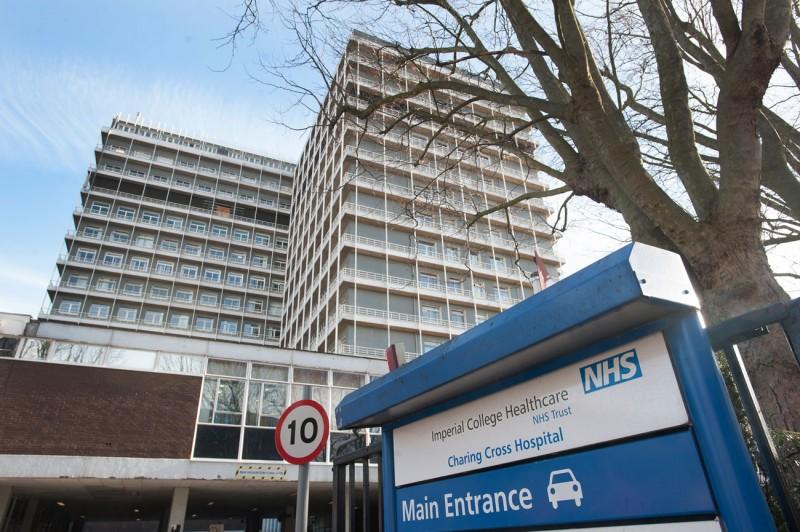
my medical journey at Charing Cross Hospital Medical School
in London. The news backdrop to that September in 1978 was
inauspicious, dominated by a medical story. Just as the World
Health Organisation was about to declare smallpox eradicated,
there was an unexpected outbreak in Birmingham. A medical
photographer at Birmingham University Medical School, Janet
Parker, became unwell with a striking rash; it was smallpox.
The diagnosis was confirmed by the head of the microbiology
laboratory that had been the source of the virus (Janet Parker’s
darkroom was immediately above the microbiology laboratory).
Parker’s was the very last death in the world from this disease.
Just a year earlier, the World Health Organisation had rejected an
application from this Birmingham research laboratory to participate
in ongoing smallpox research, mainly due to safety concerns;
despite this, the research had continued. Tragically, the head of
the laboratory also died as a result of this outbreak, slashing his
own throat in his garden shed and dying a few days later. The
subsequent official report led by RA Shooter, a microbiologist,
was one of the most damning ever produced by an enquiry in
the UK. Shooter’s report has contemporary resonance, too – the
World Health Organisation is still uncertain about the source of
COVID-19, and a laboratory leak from the Wuhan Institute of
Virology has still not been completely ruled out.
Despite the drama of this medical story, at the time I was
more interested in reading the back pages of the newspapers:
QPR were London’s top football team; Chelsea had gone bust
whilst boring Arsenal specialised in winning 1:0; Spurs were
exotic and modestly successful; Liverpool played with passion.
The England football team and Nottingham Forest FC taught
us the importance of teamwork: England by demonstrating
what happens without it; Forest by demonstrating what can be
achieved with it. Then something happened that ushered in a
profound cultural shift in social norms and our value system.
For the first time in British history, footballers started earning
more than teachers. Everything was starting to change, and
was up for grabs. Traditional, uptight, class-ridden, stiff-upperlip
Britain seemed poorly prepared for the series of shocks and
disasters that would punctuate life in the UK over the next
few decades. Little did we realise at the time that damning
reports, like Shooter’s, would soon become the norm, reflective
commentaries on the events that they described.
In addition to seeing some great football, student life in
London was also notable for live music. The soundtrack at
this time included some of the finest bands of the era, Bob
Marley, David Bowie, The Who, Miles Davies, Johnny Rotten,
Talking Heads, The Clash, Led Zeppelin and Prince. It would
also feature the strident cadences of Margaret Thatcher. Mrs
Thatcher took on the unions in a way that her predecessors had
avoided. Her dogma, ideology and lack of empathy for those
who suffered under the huge cuts in public spending set the
tone for a certain type of politics that reshaped the British landscape.
The steel-making, coal mining, car manufacturing and
ship-building industries were sold off, massively reduced in size
or closed down altogether. Arthur Scargill, president of the
National Union of Mineworkers, was regularly on the TV news,
berating Mrs Thatcher and urging the miners on. He met his
match in Margaret Thatcher. Unlike today’s government with
their weekly U-turns, Mrs Thatcher held her ground.
‘You turn if you want to. The lady’s not for turning.’
The voters lapped it up and the Tories prevailed. Although
many tried to challenge Mrs Thatcher during this era, none
exalted in doing this more than Bjørge Lillelien, a Norwegian
football commentator, in September 1981: ‘We have beaten
England! England, birthplace of giants. Lord Nelson, Lord
Beaverbrook, Sir Winston Churchill, Sir Anthony Eden, Clement
Attlee, Henry Cooper, Lady Diana. We have beaten them all.
Maggie Thatcher, can you hear me? Maggie Thatcher, I have
a message for you in the middle of an election campaign. Your
boys took a hell of a beating!’
As graduates in 1983, we were bursting with hope and
idealism. What we would come to realise, however, was that
our medical school training had overlooked the need to prepare
us as compassionate, socially aware and skilled doctors. Bedside
manner was not on the curriculum. The idea was that by cramming
us with anatomy, physiology, biochemistry, therapeutics
and pathology, topped off with a whirlwind tour through general
medicine, general surgery and the specialities, we would come
out as competent doctors.
The mantra ‘assessment drives learning’underpinned the system, and there were frequent exams to test recall of facts. Cram, test, forget; cram, test, forget. In this pre-internet era, personal knowledge was highly valued; it was hard to look things up and check the facts. Furthermore, this was also before evidence-based medicine; much of the medicine we were taught was anecdote handed down from doctor to student. There was minimal teaching about the psychological aspects of illness, and no expert patients empowered and valued for teaching us about the patient experience of health
and healthcare.
The doctors who served as our role models were predominantly
middle-class white males, many with attitudes and behaviours
that would not be tolerated today. I had a particularly humiliating
experience as a final year medical student when asked to present
a case I had not prepared adequately. I was with my firm (the
small group of medical students who were with me throughout
my medical training) and was reduced to a jibbering wreck by the
acerbic, goading and relentless questioning of a neurology registrar.
I learnt how important it is to be well prepared; I also learnt
how important it is for teaching and learning to be a safe experience,
where the student is supported, not bullied and humiliated.
This experience left me with a deep-seated fear of making a fool
of myself in public.
The dean of the medical school and our senior leaders must
have been aware of the shortcomings of the training, despite
the imperative for doctors to ‘do no harm’. But it had always
been like this, we were told. There were no misgivings about
unleashing yet another generation of unworldly and bookish
junior doctors onto the most vulnerable and needy patients.
There was little concern about how we as new doctors would
cope emotionally, being ill-equipped to deal with the challenges
ahead. The prevailing attitude in the medical profession was to
resort to gallows humour; avoid being admitted to hospital in
August of each year (the intake of newly qualified doctors starts
in early August), and avoid ending up in the hands of clueless
junior doctors. As students, we bought into the idea that medical
student training in the UK was the best in the world. Our
teachers and doctors created this myth, and none of us knew
enough to challenge it. Furthermore, we knew that the London
teaching hospitals with their long traditions were regarded as
the very pinnacle of this elite system. We were proud to be part
of it, blinded from seeing things as they really were. But before
long, wholesale changes in British society would shake up medicine,
including the training of doctors.
Medicine in the eighties was disease-focused, with little
thought for social context or the impact of disease on a patient’s
quality of life. Our clinical practice in West London brought
us into contact with a broad cross-section of society. We did
not learn much about social determinants of health by studying
our patients. Race was not discussed or factored in. The
Black and White Minstrel Show was still showing on TV with its
blacked-up actors. In April 1981 the first Brixton riot erupted,
just two miles from my student flat in Clapham South. It lasted
for three days and involved 5,000 people. Over 100 vehicles were
burned, more than half of them police vehicles. A few months earlier
in New Cross, thirteen black youths aged between fourteen
and twenty-two had died, which went on to inspire the
‘Black People’s Day of Action’.
The Sun, under the ownership of Rupert Murdoch, who went on
to buy The Times and The Sunday Times in 1981, reported the
protests under the headline ‘The Day the Blacks Ran Riot in
London’. This was the era of heavy-handed policing and the
‘sus law’, used to stop and search people thanks to permissive
use of the 1824 Vagrancy Act. The subsequent report, led by
Lord Scarman, a former high court judge, into the 1981 Brixton
Riots advised ‘urgent action’ to prevent racial disadvantage
becoming an ‘endemic, ineradicable disease threatening the
very survival of our society’.
It is clear in hindsight that, like most young white men of
my generation, I had a lot to learn. The two sheets of A4 paper
with photos of the Charing Cross Hospital Medical School
class of 1983 show a group of young, slightly anxious-looking
faces. There was not a single black UK-born medical student in
our year. The only two black students were both international
students from Nigeria.
The early 1980s in the UK was also extremely difficult for the
gay community. The AIDS pandemic was starting, and social
attitudes to gay people were still mainly negative and repressed.
In 1988 the Thatcher government introduced legislation that
prevented the ‘promotion’ of homosexuality. I remember one
of my friends wearing a full set of PPE just to take a history
from and examine an openly gay patient; there was paranoia and
hysteria about HIV, even in a medical school hospital. Imagine
the impact this must have had on the patient to be treated in
this way, rather than to be cared for with respect, kindness and
compassion. In our year at medical school there was no student
who was openly gay. However, after qualifying as a doctor, Andy
gradually came out. More than twenty years later, we were to
share an office in Cardiff when working in medical education.
I asked Andy what it had been like for him, being gay, yet not
admitting it openly.
‘It was a difficult time for me,’ he told me. ‘It was not just the
fellow students. It was also my friends and family. When I did
come out to my brother and sister they were loving and supporting.
It took me a long time to come out to my parents and I
wasn’t fully out until I had done that. I needn’t have worried
about their reaction. I knew from an early age that I would
always be gay. Of course, some of my friends guessed that I
might be gay, particularly my female friends.’
When we weren’t in lectures, the library, or the pub we spent
hours watching snooker on TV. Snooker became a national
obsession. It was cheap TV and, in retrospect, oddly gripping.
The snooker players were celebrities, more famous than football
players. It was especially popular with male medical students,
providing something to do when we should have been studying
and revising for the next examination. The very last game
I watched was the final of the World Snooker Championship,
live from the Crucible Theatre in Sheffield. It was a Sunday
evening in 1980 and the game was reaching its climax. The
snooker was interrupted by a live news report from the Iranian
Embassy siege in South Kensington. The TV cut away from the
men playing with their coloured balls, to SAS soldiers abseiling
from the roof of a building and forcing entry through the firstfloor
windows. The SAS rescued all but one of the hostages,
and killed five of the six hostage-takers. Seventeen minutes of
compelling action live on prime-time national TV; it was better
than James Bond. It also made me realise just how dull snooker
was; I never watched it again.
Then we had a brief war. Mrs Thatcher decided to take the
UK into war with Argentina in 1982 in a spat over sovereignty
of the Falkland Islands. A cursory glance at a map makes it
hard to sustain the fiction that these remote and barren islands
are UK sovereign territory. This felt at the time like another
whopper from the UK government, to be placed in the future
alongside the legitimate ownership of the Elgin Marbles and the
Benin Bronzes and the fantasy of Saddam Hussain’s weapons of
mass destruction. The national jingoism, arrogance and hubris
which were prominent throughout this ten-week war unexpectedly
intruded into my sense of self. For the first time in my life,
I was uncomfortable with being British.
But I passed my final examinations, and was ready to be a
doctor. My first junior doctor jobs would be in Plymouth, scene
of some triumphant naval homecoming from the South Atlantic
a few months earlier.
What could possibly go wrong?

